· Nett
How Much Tax to Set Aside as a UK Freelancer
A practical guide to understanding how much money to put aside each month as a self-employed freelancer in the UK. Income Tax, National Insurance, and a real example with numbers.
You invoice £3,000. You see it land in your account and think “great, I’ve got three grand.” But you don’t. Not really. Part of that money isn’t yours. It belongs to HMRC. The problem is nobody tells you exactly how much.
If you’re a freelancer in the UK, you’ve probably lived through this cycle: you get paid, you spend with some caution (or maybe not enough), and when January rolls around you get a nasty surprise. Or worse: you get a payment on account demand and realise you owe more than you expected.
That’s what this article is about. How much to put aside, how to work it out, and why starting early matters.
The two big bites: Income Tax and National Insurance
As a self-employed freelancer in the UK, you pay two main things:
- Income Tax: what you pay to HMRC based on your profit.
- National Insurance (NI): your contribution to the social security system that funds your State Pension, Maternity Allowance, and other benefits.
There’s a third one many people confuse: VAT. But VAT isn’t your tax. It’s a tax you collect from your customers and hand over to HMRC. It shouldn’t affect your pocket if you manage it properly (don’t spend it, basically). So here we’re focusing on the two that directly hit your income.
1. Income Tax: the tax that grows with your income
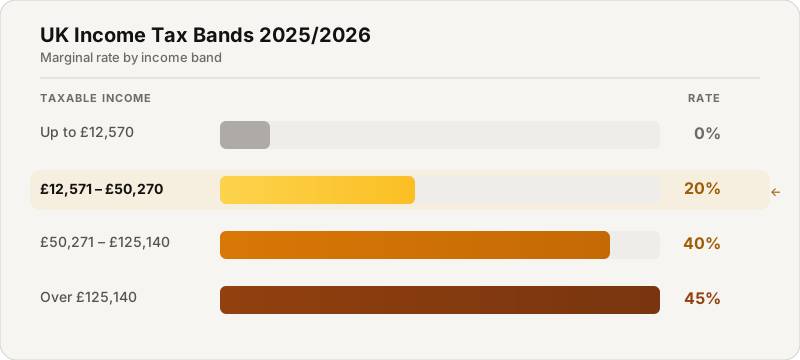
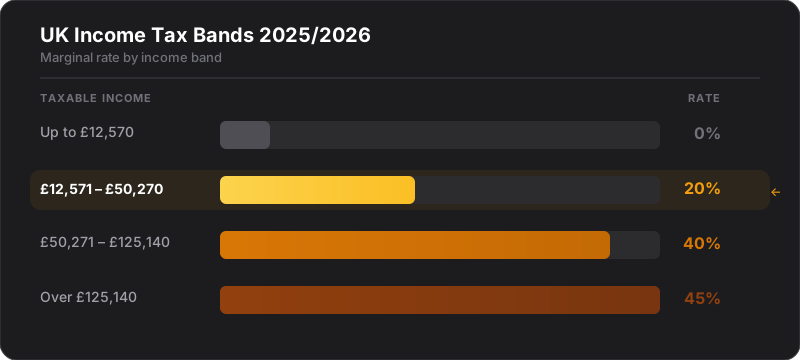
Income Tax works in bands. The more you earn, the higher the percentage you pay, but only on the portion that falls within each band, not on everything. This is important, and a lot of people get it wrong.
The bands for 2025/2026 are:
| Taxable income | Rate |
|---|---|
| Up to £12,570 | 0% (Personal Allowance) |
| £12,571 – £50,270 | 20% (Basic Rate) |
| £50,271 – £125,140 | 40% (Higher Rate) |
| Over £125,140 | 45% (Additional Rate) |
The key thing: Income Tax is calculated on your profit, not on your turnover. That means: income minus allowable expenses. If you invoice £40,000 but have £5,000 in expenses (coworking, software, phone, training…), your taxable profit is £35,000, not £40,000.
Self Assessment and Payments on Account
Every year, you file a Self Assessment tax return by 31 January (for the tax year ending the previous 5 April). This is where you declare your income, expenses, and calculate how much tax you owe.
The catch: if your tax bill is over £1,000, HMRC will require Payments on Account. These are two advance payments towards your next year’s tax bill:
- 31 January: 50% of the previous year’s bill
- 31 July: another 50%
So in your first year, you could get hit with your full tax bill plus 50% on account for the next year, all in January. That’s potentially 150% of what you expected. If you’re not prepared, it’s brutal.
Set money aside from day one. January is the worst time to start thinking about tax.
2. National Insurance: your social security contribution
As a self-employed person, you pay Class 4 National Insurance contributions:
- Class 4: 6% on profits between £12,570 and £50,270, plus 2% on anything above £50,270.
Class 2 NICs were abolished from April 2024. If your profits are above £12,570, you automatically receive National Insurance credits for the State Pension, with no separate weekly payment required.
Unlike Spain’s social security system (which can run to €400+/month), UK National Insurance for freelancers is relatively light. But it’s still money you need to account for.
Practical example: freelancer earning £40,000 per year
Let’s run through a real case. A freelance designer, a few years in, invoicing £40,000 this year.
Step 1: Calculate your profit
| Concept | Amount |
|---|---|
| Annual turnover | £40,000 |
| Deductible expenses (coworking, software, phone, training…) | −£5,000 |
| Taxable profit | £35,000 |
Step 2: Calculate your Income Tax
Your taxable profit is £35,000. Apply the progressive bands:
- Personal Allowance: first £12,570 at 0% = £0
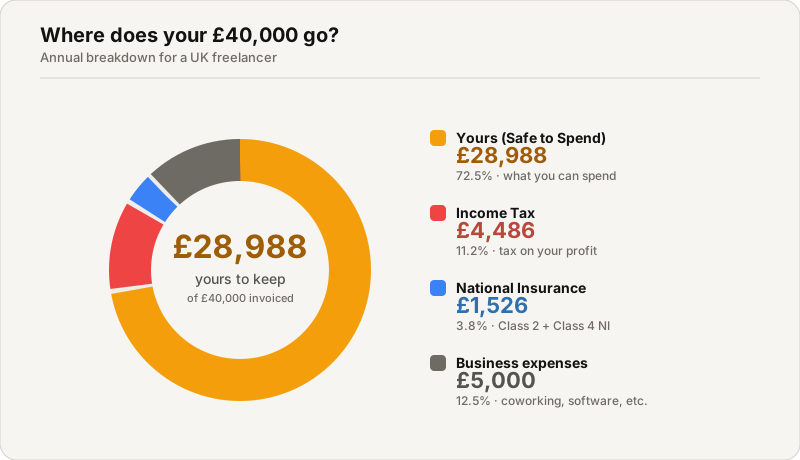
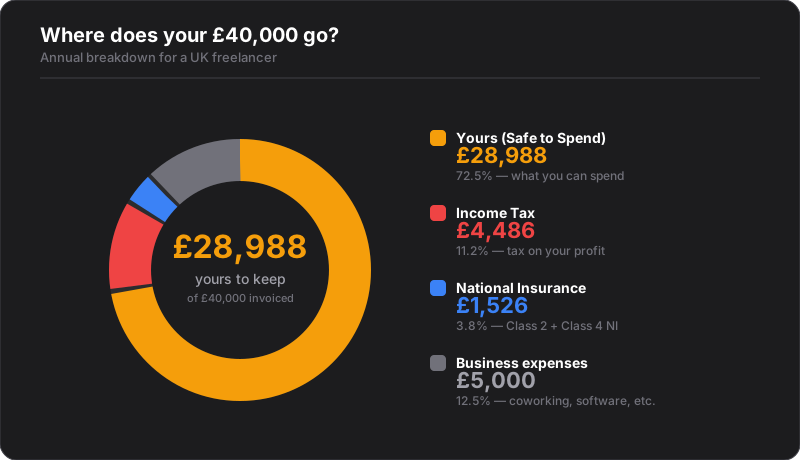
- Basic Rate: remaining £22,430 at 20% = £4,486
Income Tax: ~£4,486
Notice how the first £12,570 is completely tax-free. You only pay 20% on the portion between £12,570 and £35,000. That’s the beauty (and confusion) of progressive tax bands.
Step 3: Calculate your National Insurance
- Class 4: £22,430 (profit between £12,570 and £35,000) × 6% = £1,346
Total National Insurance: ~£1,346
The summary
| Item | Annual | Monthly |
|---|---|---|
| Income Tax | £4,486 | £374 |
| National Insurance | £1,346 | £112 |
| Total tax | ~£5,832 | ~£486 |
Of your £40,000 turnover:
- £5,000 goes to business expenses
- £5,832 goes to tax
- You keep ~£29,168, or about £2,431 per month
That’s an effective rate of ~14.6% on your turnover. Out of every £100 you invoice, roughly £15 goes to HMRC.
But don’t be fooled, it rises quickly. Once your profit crosses £50,270, you hit the 40% band. A freelancer earning £60,000 has a very different effective rate than one earning £35,000.
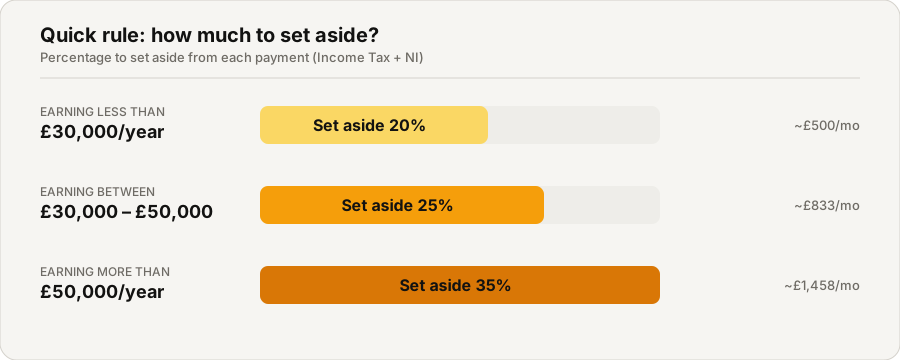
The quick rule: set aside between 20% and 35%
If you don’t want to do calculations every time you get paid, here’s a practical rule of thumb:
- Earning less than £30,000/year → set aside 20% of every payment
- Earning between £30,000 and £50,000/year → set aside 25%
- Earning more than £50,000/year → set aside 35%
These percentages cover both Income Tax and National Insurance. They’re approximate, but they’ll keep you safe from January surprises.
The trick is simple: every time a payment lands in your account, move that percentage into a separate savings pot immediately. Don’t touch it. It doesn’t exist. It’s HMRC’s money that’s temporarily in your account.
A few things to check with your accountant
This guide simplifies things on purpose. In reality, there are variables that could change your numbers significantly:
- Marriage Allowance can save you up to £252 per year if your partner earns less than the Personal Allowance.
- Student loan repayments (Plan 1, 2, 4, or 5) add an extra 6–9% on income above the threshold, this isn’t technically tax, but it comes out of your Self Assessment.
- VAT registration threshold: if your turnover exceeds £90,000 (2025), you must register for VAT. This means charging 20% VAT on invoices and dealing with quarterly VAT returns.
- Pension contributions reduce your taxable income, which can bring you into a lower effective tax rate.
- Construction Industry Scheme (CIS) has its own deduction rules if you work in construction.
- Allowable expenses you might not be claiming: home office costs, mileage, professional insurance, accounting fees.
A good accountant helps with all of this. Our goal is simply that you always know how much you can actually spend without landing in trouble.
Nett does this calculation for you, every day
All those numbers, from the tax bands to NI classes and the Personal Allowance, are crunched automatically by Nett each time you log income or an expense.
On your dashboard you see one number: Tu Nett. That’s what’s truly yours. That’s what you can actually spend after setting aside for tax. No spreadsheets. No January surprises. None of that nagging feeling of not knowing whether you’re spending HMRC’s money.
You invoice £3,000, and Nett tells you: “Of that £3,000, you can spend £2,400. The rest is for HMRC.” No calculations. No surprises at Self Assessment time.
Because knowing what you earn isn’t the same as knowing what’s yours. And that’s exactly what Nett tells you.